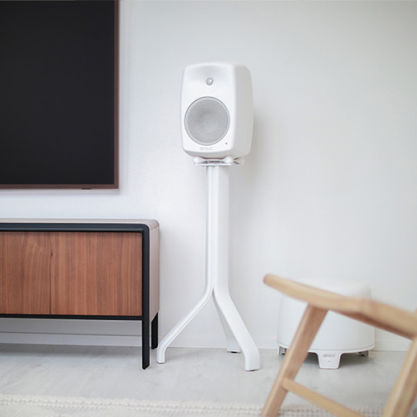
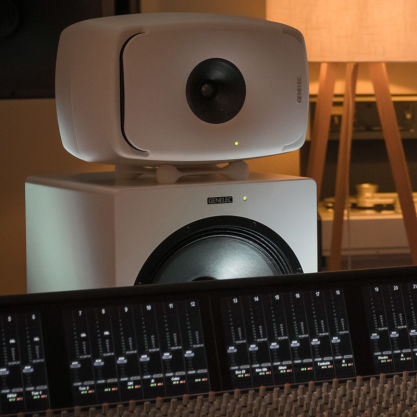
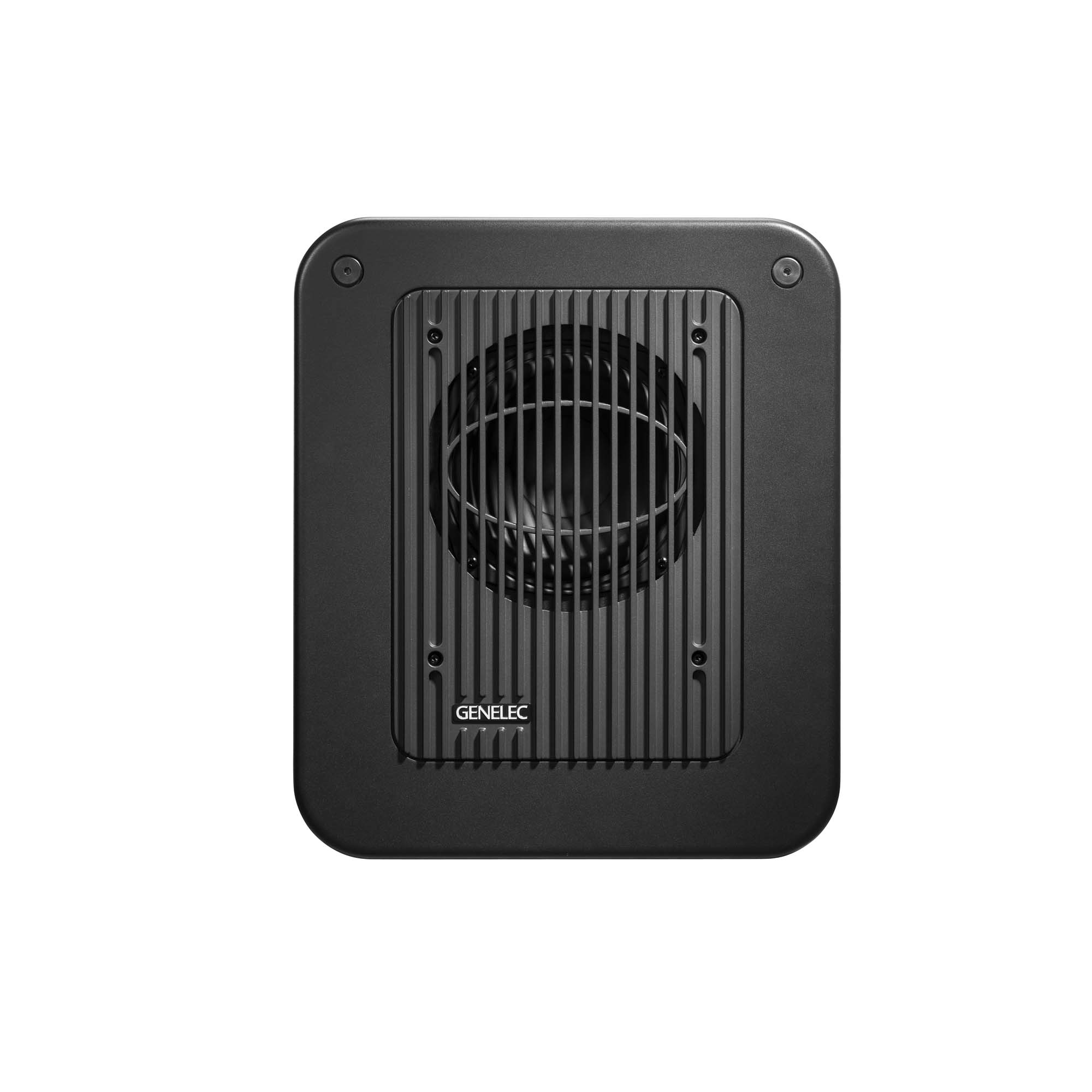
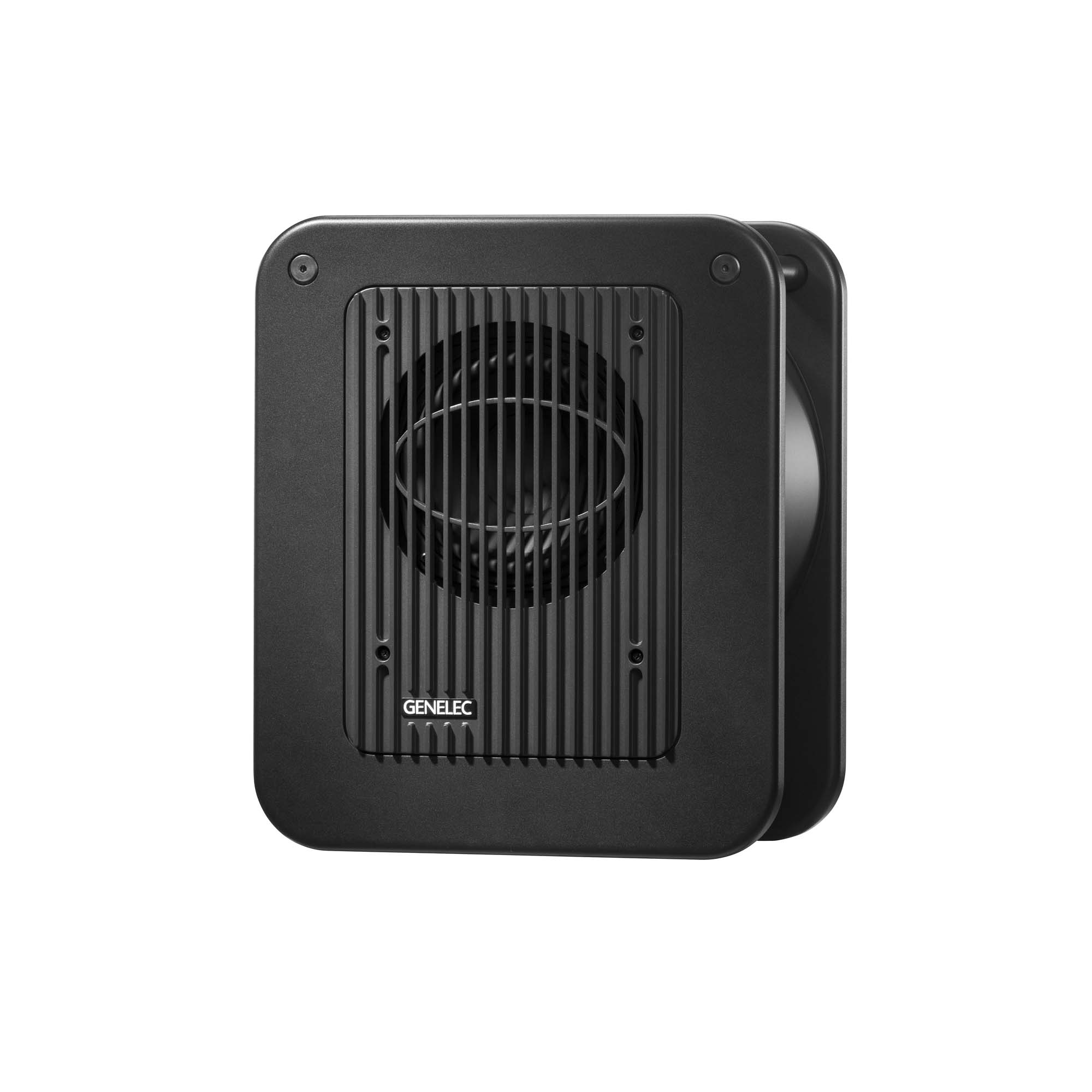
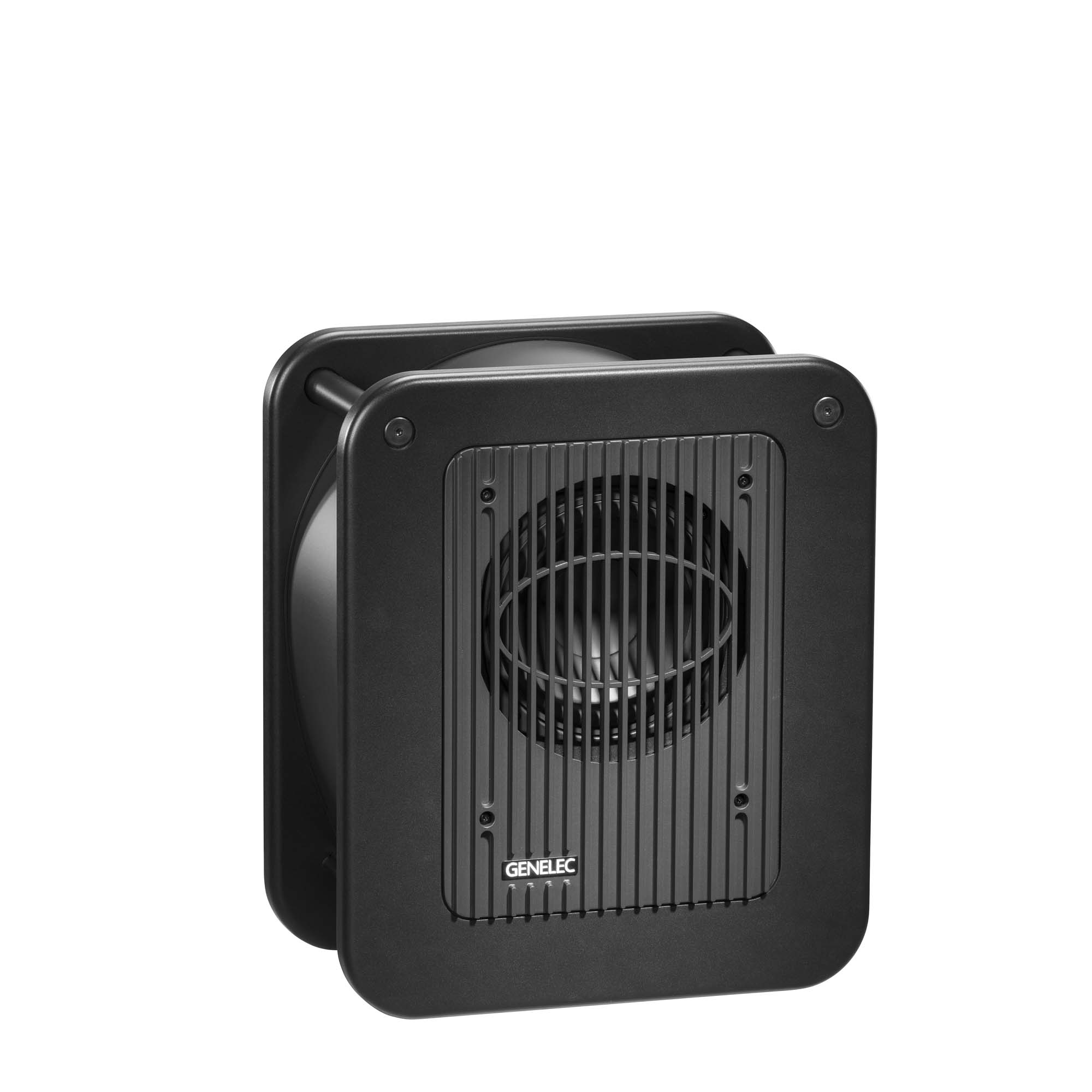
Vår mest kompakta subbas, Modell 7040A, bringar kontrollerad lågbas och tillförlitliget till de mest krävande produktions-rummen.
7040A
Studio Subbas

Aktiva delningsfilter

Bass Management

SPL
100 dB

Frekvensomfång
30 Hz - 90 Hz (-6 dB)

Mått
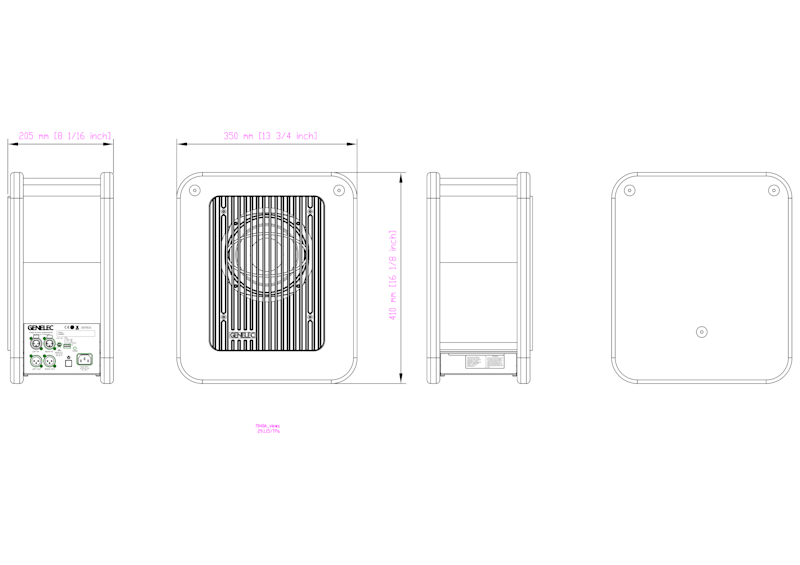
H 410 x W 350 x D 205 mm, (vy i tum)
Inte bara ”mer bas”
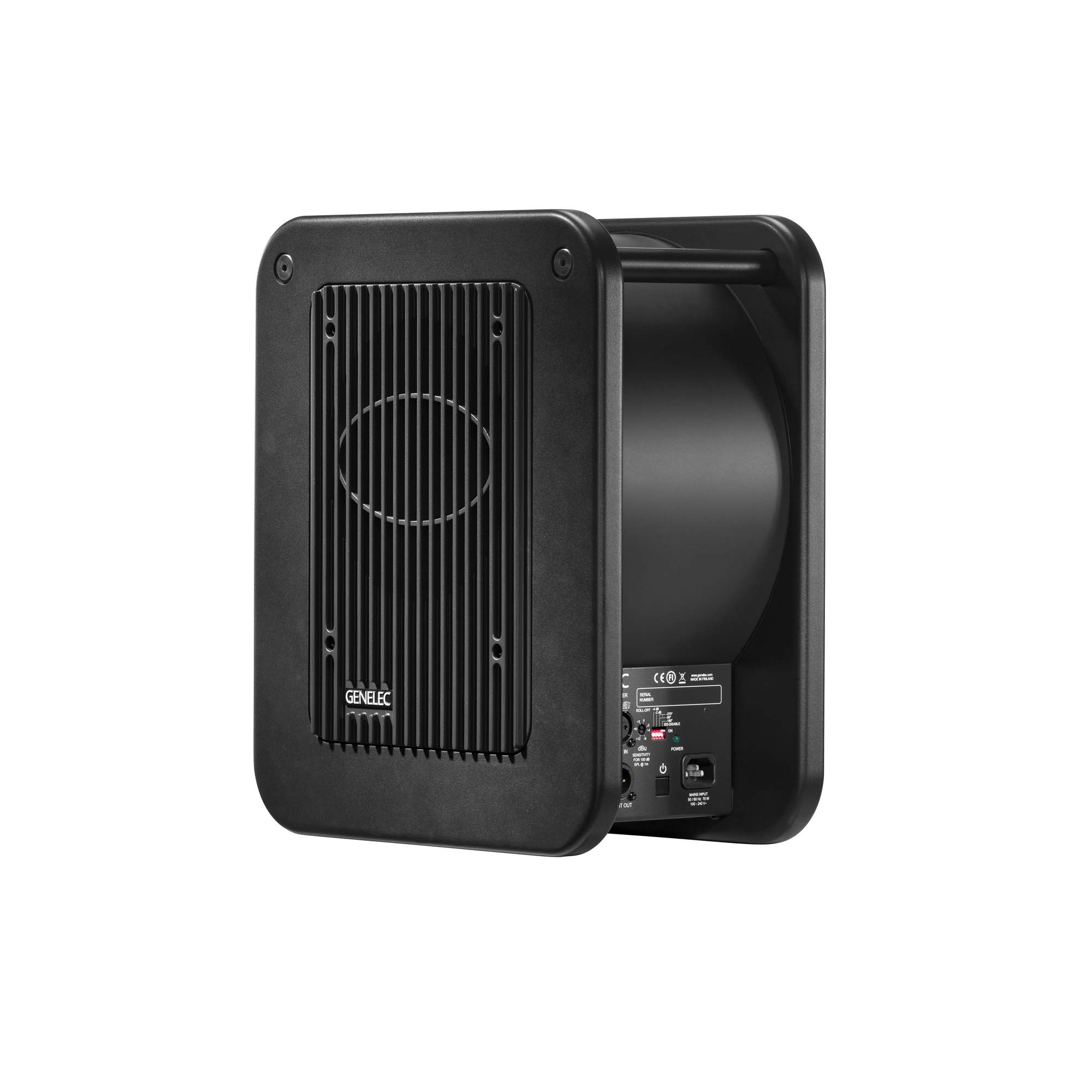
En bra subwoofer ger så mycket mer än bara ”mer bas”. 7040A-modellens laminerade spiralkabinett säkerställer hög SPL-prestanda som är precis, tydlig och fri från distorsion, ända ner till 30 Hz. Kombinationen av 7040A och våra närfältshögtalare 8010 eller 8020 skapar ett sömlöst fullregistersystem. När det låter rätt.

Överlägsna bass-managementfunktioner
Den inbyggda bass-managementtekniken gör det möjligt för 7040A att filtrera och hantera LF-innehåll från huvudkanalerna. Detta ökar headroom och minskar distorsionen från huvudhögtalarna som då kan fokusera sin energi på resten av frekvensspektrumet. Dessutom kan du använda rumskorrigeringsreglagen för att optimera 7040A för ditt rum på samma sätt som dina monitorhögtalare, så du kan alltid lita på att dina mixar överförs perfekt.
Genelec
7040A Studio Subwoofer
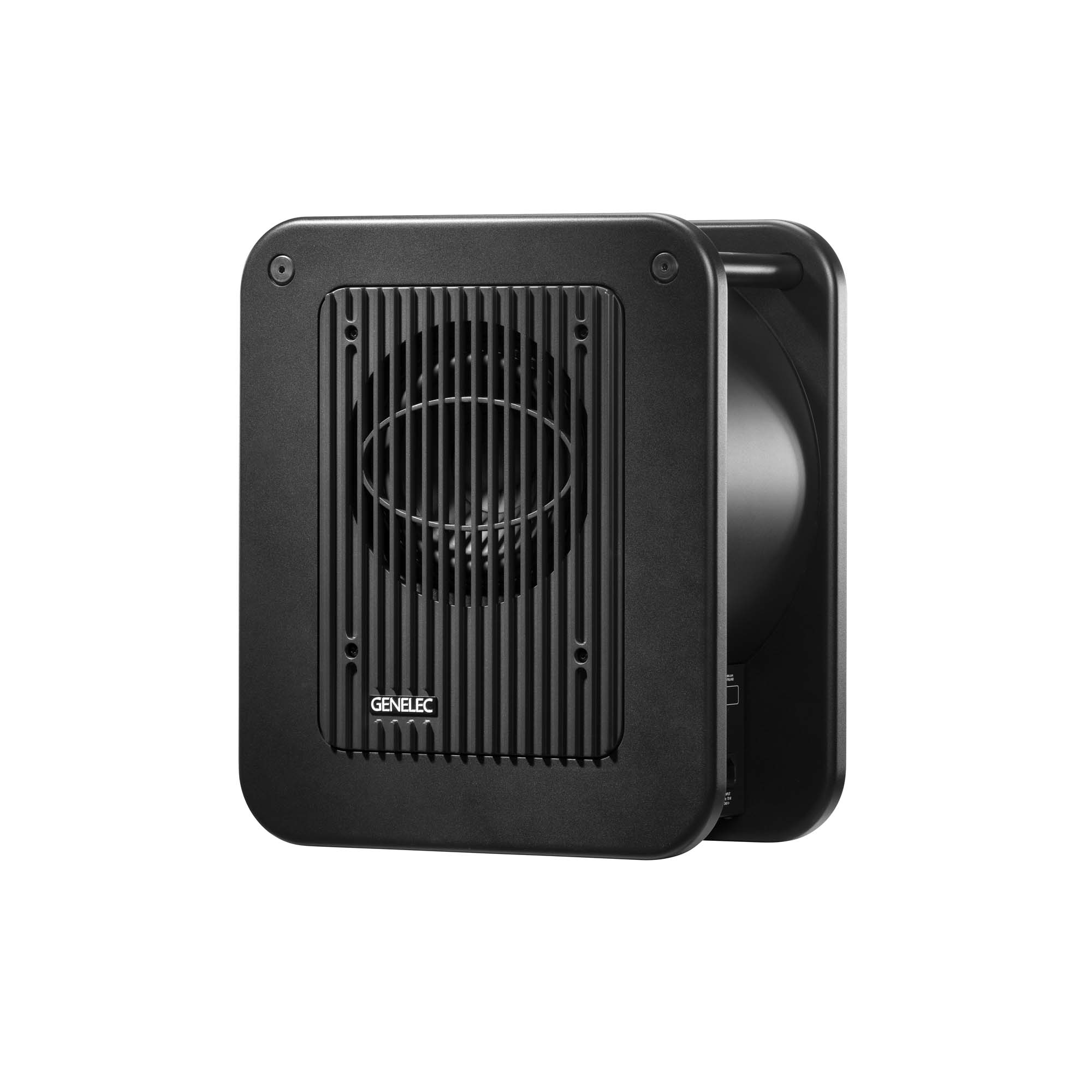
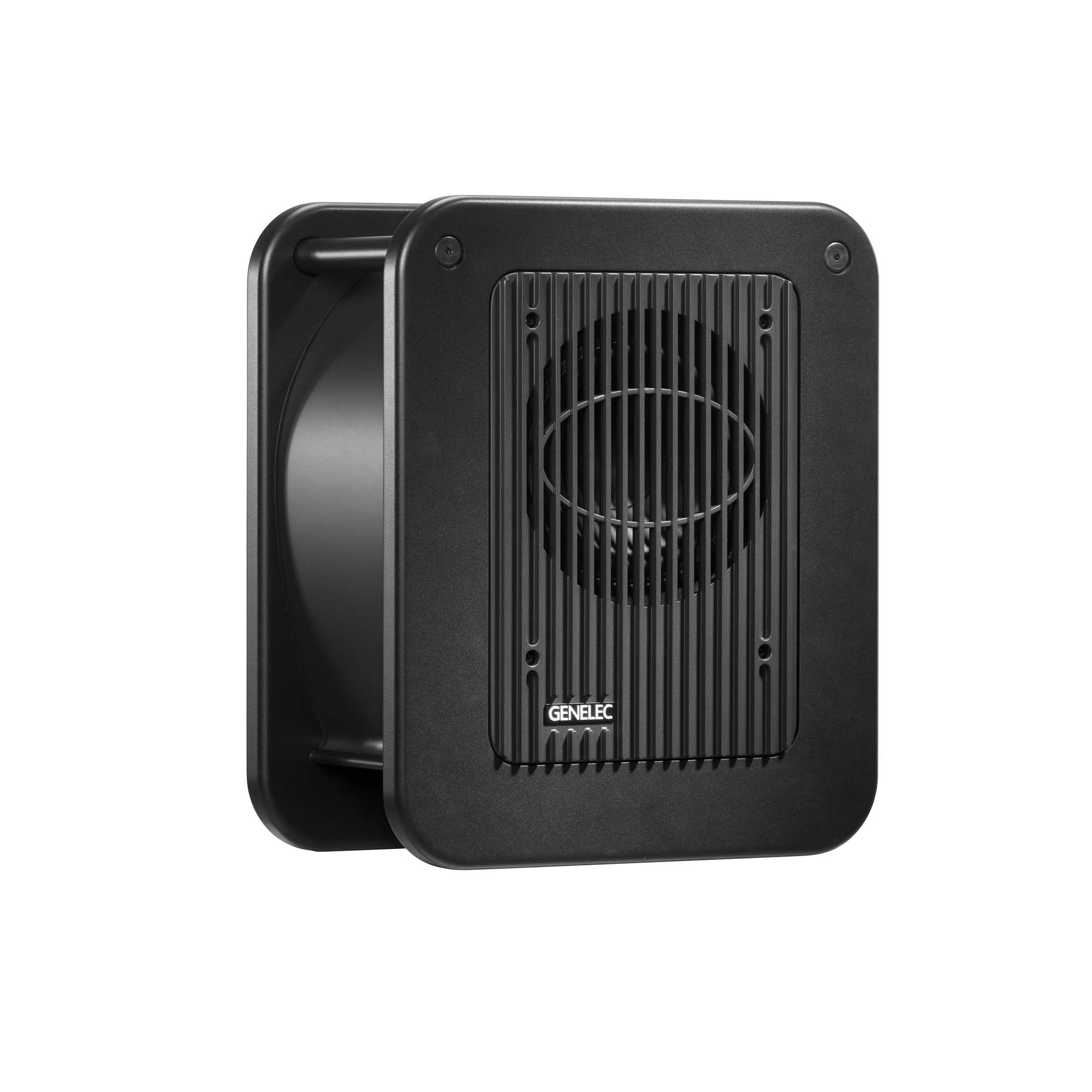
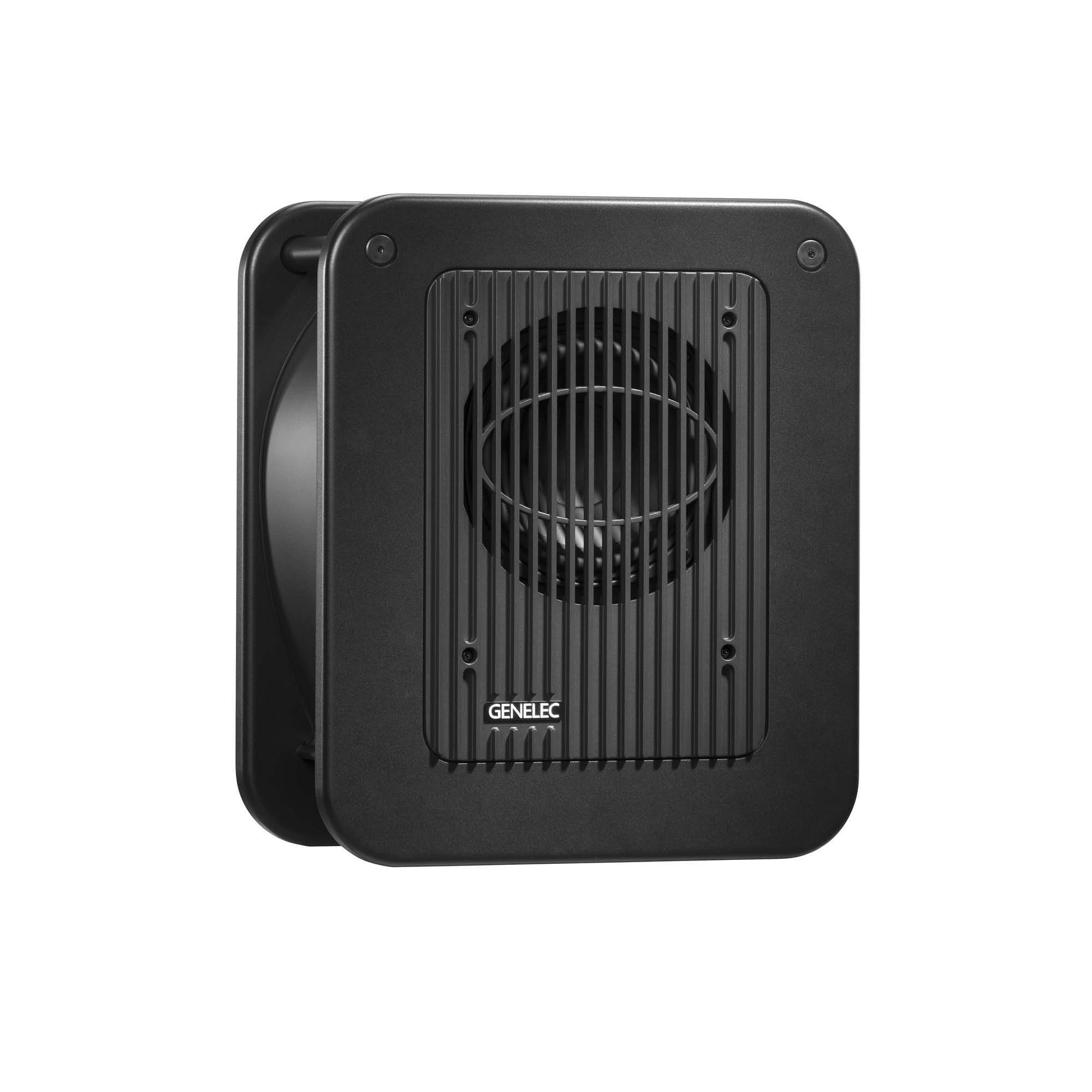

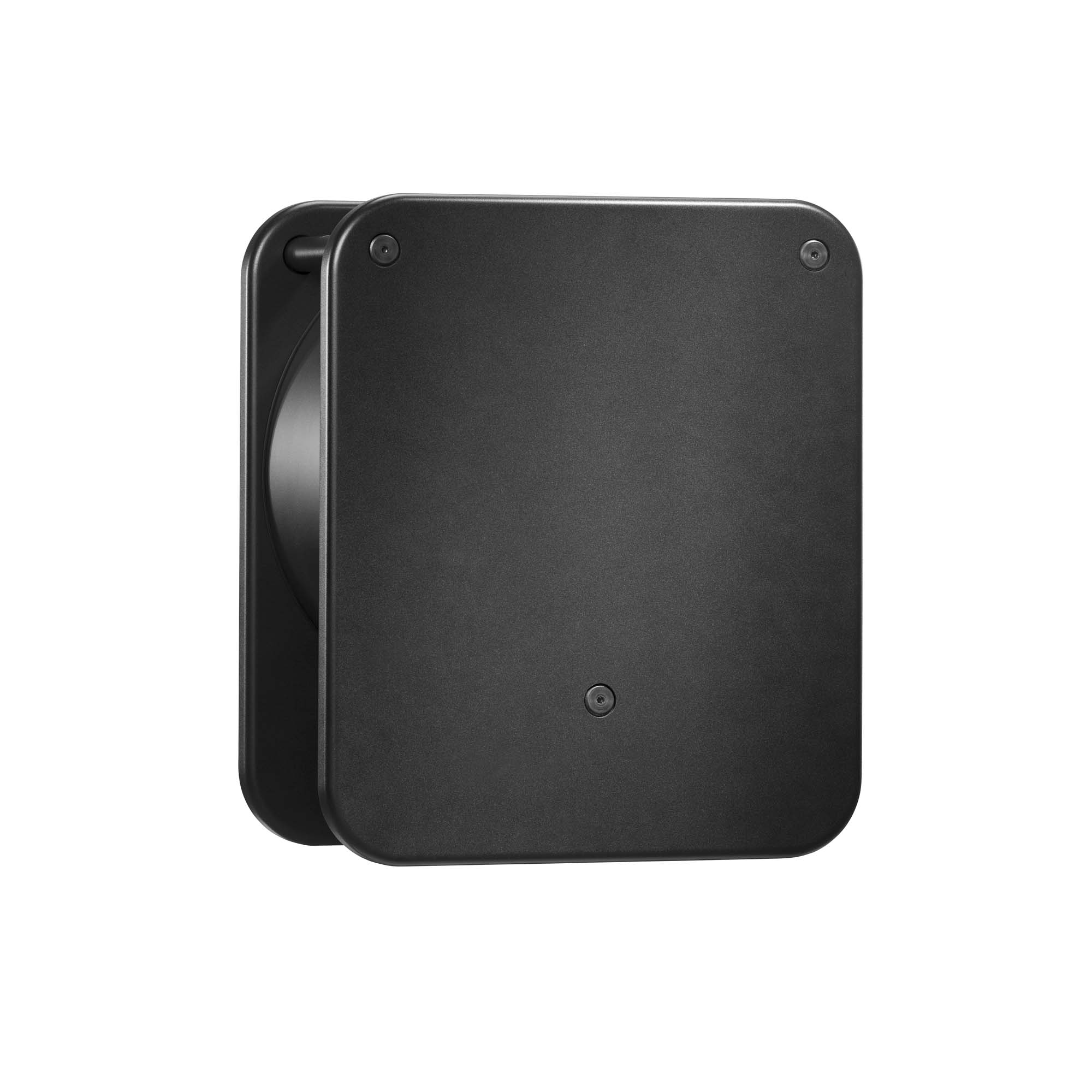
Färgval
Genelec
7040A Studio Subwoofer
7040A
Awards
SPL
100 dB

Förstärkareffekt
50 W Bass (Class D)
Frekvensomfång
30 Hz - 90 Hz ("-6 dB")

Noggrannhet Frekvensomfång
± 3 dB (33 Hz - 85 Hz)

Storlek på högtalarelement
⌀ 165 mm Bass (vy i tum)
Mått
H 410 x W 350 x D 205 mm, (vy i tum)

Vikt
11.3 kg / 24.9 lb

Anslutningar
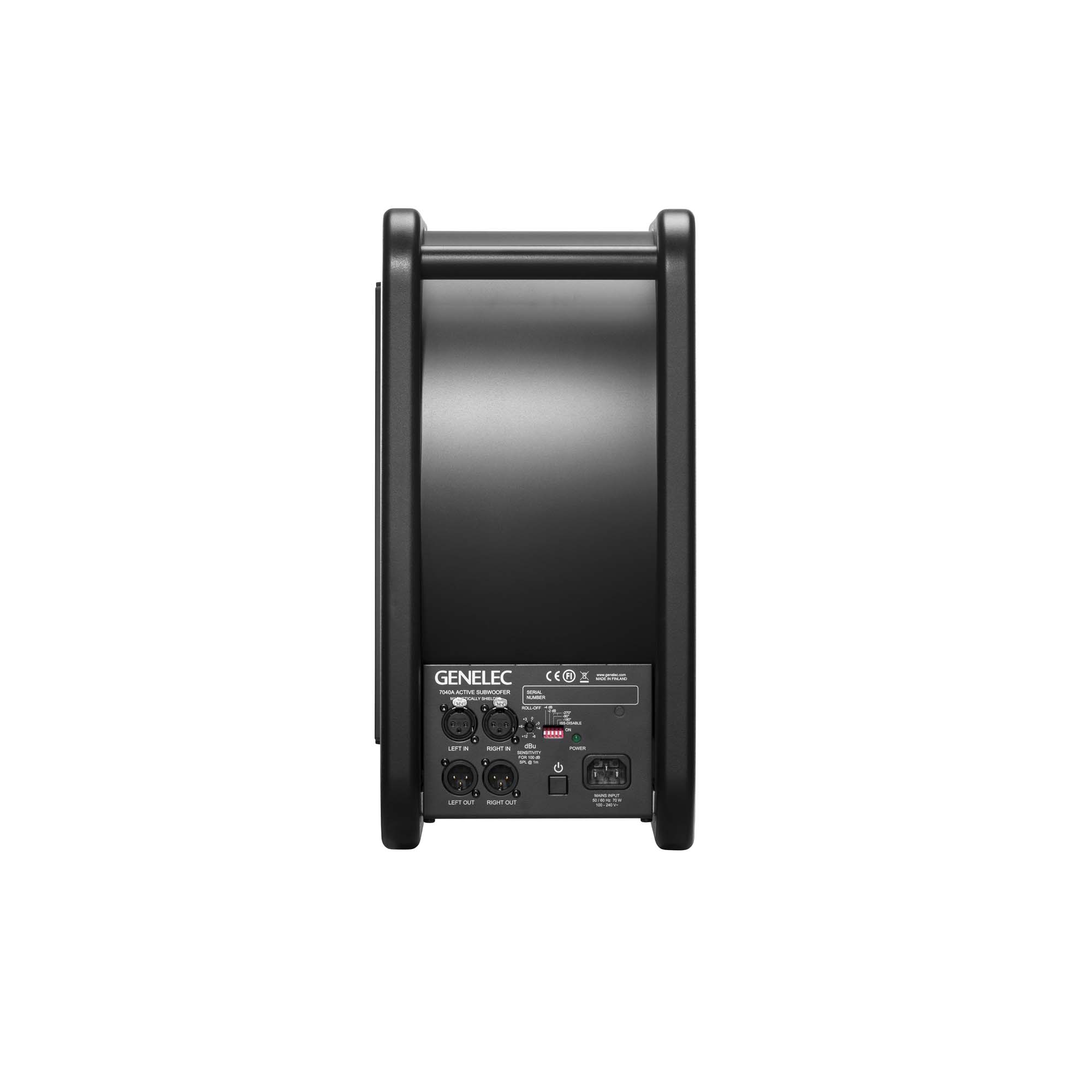
2 x XLR Analog Input
2 x XLR Analog Output
7040A Studio Subwoofer
Studio Subbas
Tekniska Specifikationer
Vår mest kompakta subbas, Modell 7040A, bringar kontrollerad lågbas och tillförlitliget till de mest krävande produktions-rummen.


Specifikationer för system
Frekvensomfång
33 Hz - 85 Hz (± 3 dB)
Low cutoff -6 dB
30 Hz
High cutoff -6 dB
90 Hz

SPL
Short term max SPL Maximum short term sine wave SPL output averaged from 40 to 85 Hz, measured in half space at 1 meter.
≥100 dB
Egenljud
Egenljud Self generated noise level in half space at 1 m (A-weighted).
≤5 dB SPL
Vikt
Vikt11.3 kg (24.9 lb)
Mått
Höjd
410 mm
Bredd
350 mm
Djup
205 mm
Kabinett
Material för kabinett
MDF
Typ av kabinett
Reflex port
Högtalarelement
Bass
Typ av element
Cone
Diameter
165 mm
Harmonisk distorsion
Harmonic distortion at 90 dB SPL at 1 m on axis in half space 40…85 Hz, 2nd ≤2.5 %
Avsnitt Förstärkare
Förstärkare
7040A bass amplifier
50 W Class D
A high-efficiency, low-distortion 50W Class D amplifier with integrated driver protection circuitry.
Nätspänning
100-240 VAC 50/60Hz
Strömförbrukning
ISS Aktiverat
≤0.5 W
Inaktiv
≤5 W
Full effekt
70 W
Avsnitt Signalbehandling
Anslutningar
2 x Input Analog signal input connector XLR female, balanced 10 kOhm.
2 x Output XLR male.
Produktvarianter
Produktkoder
Produktkod
Produktinformation
EAN-kod
CN-kod
7040AP
7040A Studio Subwoofer
För mer ingående teknisk information vänligen se produktens bruksanvisning
Nyckelteknologier

Aktiva delningsfilter

Bass Management

Intelligent Signal Sensing (ISS™)

Tekniken Laminar Spiral Enclosure (LSE™)

Optimerade förstärkare

Skyddskretsar

Rumskorrigering
Aktiva delningsfilter vid låga signalnivåer.

Elektroniska delningsfilter gör det möjligt att dela upp ljudsignalen i separata frekvensband som kan dirigeras till enskilda slutsteg, vilka sedan kopplas till specifika givare som är optimerade för ett specifikt frekvensband.
Aktiva delningsfilter finns både i digitala och analoga varianter. Genelecs digitala aktiva delningsfilter har extra funktioner för signalbearbetning, såsom skydd av element, fördröjning och utjämning.
Genelecs analoga aktiva delningsfilter innehåller elektroniska komponenter som används vid låga signalnivåer som är lämpliga för ineffekten till slutstegen. Detta till skillnad från passiva delningsfilter som används vid höga signalnivåer från slutstegets uteffekt, vilket gör att de måste hantera höga strömstyrkor och i vissa fall även hög spänning.
I ett vanligt tvåvägssystem behöver de aktiva delningsfiltren två slutsteg – ett för baselementet och ett för diskantelementet.
Designen med aktiva delningsfilter har flera fördelar:
– Frekvensgången blir oberoende av eventuella dynamiska förändringar i elementets elektriska egenskaper eller nivå.
– Ökad flexibilitet och precision för att finjustera den utgående frekvensgången för de specifika elementen.
– Varje element har ett eget slutsteg och egen signalbearbetning. Detta isolerar varje element från de signaler som hanteras av övriga element, vilket minskar problemen med intermoduleringsdistorsion och förvrängning.
– Möjlighet att kompensera för känslighetsvariationer mellan elementen.
– Möjlighet att kompensera för avvikelser i frekvens- och fasåtergivning som är kopplade till elementets egenskaper inom det avsedda passbandet.
– Den platta frekvensgång som en högkvalitativ aktiv högtalare ger är resultatet av den kombinerande effekten av delningsfilterresponsen, slutstegsresponsen och elementresponsen i ett högtalarkabinett.
Genom att använda en aktiv teknik kan man justera frekvensgången och optimera hela högtalarsystemet i olika miljöer utan att behöva använda dyra externa equalizers. Slutresultatet är ett enklare, mer tillförlitligt, effektivt, konsekvent och precist aktivt högtalarsystem.
Bass Management hanterar lågfrekvenserna i multikanalsformat.
Principen för Bass Management är att basen från huvudkanalerna och lågfrekvenskanalen (Low Frequency Effect – LFE) endast riktas och återges av högtalare med kapacitet att hantera dem, oavsett om de är huvudhögtalare eller en eller flera subwoofers.
Vid stereoåtergivning måste signaler från 20 Hz till 20 kHz spelas upp. Stora flervägssystem kan ge en jämn återgivning av en så pass stor bandbredd. Med multikanalsljud måste både professionella system och system för hemmabruk kunna återge ljud mellan 20 Hz och 20 kHz för varje kanal. För att uppnå detta måste huvudhögtalare, subwoofers och delningskretsar samspela.
Ett Bass Management system använder antingen analoga elektriska kretsar eller mjukvarubaserad filtrering som filtrerar lågfrekvenser från huvudkanalerna och förmedlar informationen till en eller flera subwooferströmmar.
Den dedikerade LFE-kanalen kan också styras via subwoofern och adderas till lågfrekvenserna från de andra huvudkanalerna. Bass Management grundläggande och huvudsakliga syfte är därmed att säkerställa att hela bandbredden från alla kanaler kan återges.

Fördelar med Bass Management:
– Subwoofern utökar systemets frekvensgång ner till de lägsta gränserna av spektrumet för hörbart ljud.
– Högtalaren kan ge en högre maximal ljudnivå när den inte återger lågfrekvenser.
– Optimerad lågfrekvensåtergivning med hjälp av korrekt placering av subwoofern. Även monitorhögtalarna kan placeras mer fritt.
– Subwooferns uteffekt är justerad med avseende till nivå och fas med monitorhögtalare som levererar rak och precis återgivning ner till 19 Hz och över delningsfrekvensen.
– LFE-kanalens uteffekt (0 eller +10 dB avseende huvudkanalerna) kan väljas för precis återgivning beroende på typ av källa.
– Möjligheten att förbikoppla subwoofern gör det möjligt att utvärdera dess ljudpåverkan.
Intelligent Signal Sensing (ISS™) minskar strömförbrukningen i standby-läge.

Intelligent Signal Sensing lanserades 2013 och uppfyller både EU:s ErP-direktiv och Genelecs egna hållbarhetsåtaganden.
ISS™-kretsen övervakar högtalarens signalingång och fastställer om den används eller inte. Om ISS-kretsen inte känner av någon ljudsignal under en viss tid försätter den automatiskt högtalaren i strömsparläge så att den drar mindre än 0,5 W. När en ingångssignal upptäcks aktiveras högtalaren direkt. Högtalaren kommer att börja spara ström direkt när arbetet pausas.
En ”ISS Disable”-brytare finns på baksidan av alla högtalare, bredvid rumskorrigeringsreglagen. När högtalarens huvudströmbrytare står på ”ON” aktiveras ISS™-funktionen (strömsparläge) automatiskt.
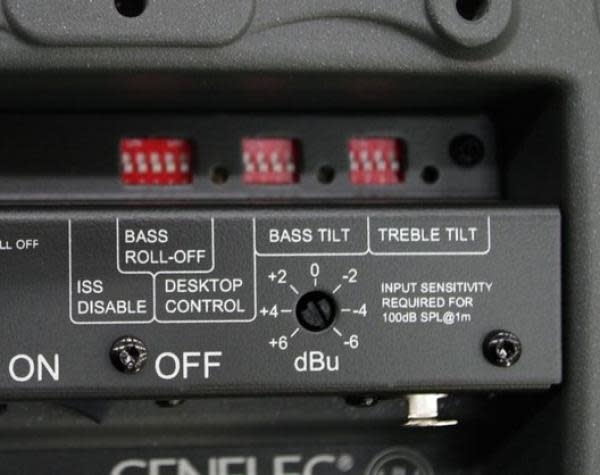
Om du inte vill använda ISS™-funktionen kan du stänga av den genom att sätta ”ISS Disable”-brytaren på den bakre panelen på ”ON”. I det här läget stängs högtalaren av och slås på endast med hjälp av huvudströmbrytaren.
Observera att man alltid kan stänga av högtalaren helt med huvudströmbrytaren.
Den otroligt effektiva tekniken Laminar Spiral Enclosure (LSE™) ger korrekt återgivning av lågfrekvenser.

Kraven på subwoofers har ökat betydligt de senaste åren, vilket har lett till att traditionella designkoncept inte längre är effektiva. För Genelec innebär detta att vi måste ta djärva initiativ för att uppnå absolut högsta prestanda.
Efter många års forskning och expertis insåg Genelecs ljudtekniker att det fanns nya utmaningar att ta tag i under 2000-talet. Den unika, böjda formen på kabinettet till aktiva subwoofers i LSE™-serien är det revolutionerande, patenterade resultatet av vårt hårda arbete.
Alla subwoofers i LSE™-serien från Genelec har det innovativa basreflexkabinettet Laminar Spiral Enclosure™ (LSE™). Konstruktionen ger ett utomordentligt laminärt flöde med minimalt turbulensljud och optimal placering av ett långt reflexrör i ett litet utrymme.

Principerna från LSE-tekniken används även i utformningen av reflexporten i våra aluminiumkabinett.
Den spiralformade designen ger en otroligt stabil kabinettexteriör samtidigt som den formar subwooferns reflexport. Tack vare den integrerade designen kan luften både in och ut genom kabinettet genom den spiralformade porten flöda helt fritt. Detta ger ett utomordentligt precist och följsamt lågfrekvenssystem med uppmätt nivå av andra och tredje ordningens harmonisk distorsion som vanligtvis är bättre än 30 dB under grundtonen.

I kombination med Genelecs aktiva elektroniska komponenter för bass-management för stereo- eller multikanalsljud ger våra subwoofers i LSE™-serien lågfrekvenslyssning som inte kan fås någon annanstans. Resultatet är en produktserie med överlägsen teknisk prestanda: Genelecs LSE-serie med subwoofers är unik, komplett och ger konsekvent prestanda som inte liknar några andra produkter på marknaden.
Varje givare drivs av en egen optimerad förstärkare.

Elektroniska delningsfilter gör det möjligt att dela upp ljudsignalen i separata frekvensband som kan dirigeras till enskilda slutsteg, vilka sedan kopplas till specifika givare som är optimerade för ett specifikt frekvensband.
I ett vanligt tvåvägssystem behöver det aktiva delningsfiltret två slutsteg – ett för baselementet och ett för diskantelementet. Slutstegen är direkt kopplade till den aktiva högtalarens element, vilket gör att slutstegens belastning blir mycket enklare och välkänd. Varje elementspecifikt slutsteg har endast en begränsad frekvens att förstärka (slutsteget är placerat efter det aktiva delningsfiltret), vilket bidrar till att göra designen enkel.
Den aktiva designprincipen har flera fördelar:
– Slutstegen är direkt kopplade till högtalarens element, vilket maximerar kontrollen som utövas av slutstegens dämpning på elementets talspole. Detta reducerar i sin tur följderna av dynamiska förändringar i elementets elektriska egenskaper. Detta kan förbättra systemets transienta svar.
– Minskning av den uteffekt som krävs från slutsteget. Tack vare att ingen energi går förlorad i komponenterna till det passiva delningsfiltret minskas den uteffekt som krävs från slutsteget betydligt (med upp till 50 % i vissa fall), utan någon minskning av den akustiska uteffekten i högtalarsystemet. Detta kan bidra till att sänka kostnader och öka både ljudkvaliteten och systemets tillförlitlighet.
– Ingen förlust mellan förstärkaren och elementenheterna, vilket leder till maximal akustisk effektivitet.
– Den aktiva tekniken kan uppnå överlägsen ljudprestanda vs. storlek vs. lägre frekvensgräns.
– Alla högtalare levereras som ett fabrikskonfigurerat system (förstärkare, delningsfilterkomponenter, kabinett och elementsystem).
Sofistikerade skyddskretsar för drivenheter för säker användning.

När du arbetar med avancerad ljudproduktion är det otroligt viktigt att dina monitorsystem alltid är tillförlitliga och fungerar som de ska. Det främsta skälet till Genelecs framgångar inom sändningstillämpningar är våra produkters tillförlitlighet, och en viktig faktor bakom detta är de interna skyddskretsarna som finns i alla våra produkter – ända sedan 1978.
Skyddskretsarna förebygger fel på elementet genom att analysera signalnivåerna. Vid plötsliga toppar eller för höga nivåer under en längre tid minskas signalnivån automatiskt. Den här funktionen påverkar givetvis inte ljudkvaliteten på något sätt när högtalaren används inom ramen för dess specifikationer. Den hindrar endast avvikande ingångssignaler från att orsaka skada på högtalaren.
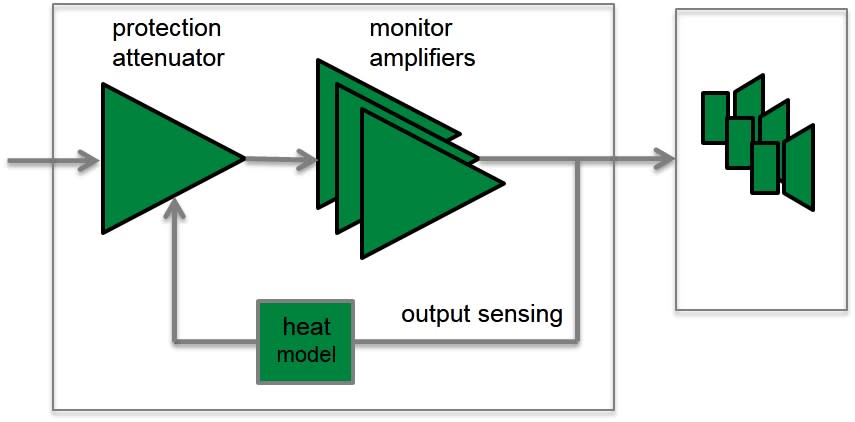
Skyddskretsarnas funktioner och fördelar:
– Minskar uteffektnivån vid behov (t.ex. när temperaturen vid elementets talspole uppnår ett gränsvärde), vilket förbättrar systemets tillförlitlighet betydligt
– Lämpliga skyddskretsar i alla högtalare och subwoofers gör det möjligt att maximera systemets utgående ljudnivå.
Precis rumskorrigering för optimering av högtalarprestandan i ditt rum.

Interaktionen mellan rummets akustik och högtalarens ljudspridning är komplex. Alla rum påverkar monitorhögtalarens återgivning på något sätt, till exempel reflekterande rum jämfört med ljudisolerade rum och placering av högtalarutrustning vid väggen eller på avstånd från väggen.
Alla högtalare från Genelec har rumskorrigeringsalternativ som kan användas för att kompensera för rummets påverkan på akustiken och uppnå en platt frekvensgång vid lyssningspositionen.
Analoga system
Genelecs analoga högtalare har mångsidiga rumskorrigeringsalternativ. Här ingår (beroende på modell):
– Lågfrekvensfilter och -lutning
– Diskantfilter och -lutning
– Basnivå
– Mellanregisternivå
– Diskantnivå
– Desktop Control

För lågfrekvenser finns två huvudsakliga styrningsalternativ. Baslutningskontrollen fungerar som ett shelving-filter tillsammans med lågfrekvensfiltret som gör det möjligt för dig att optimera systemets låga och riktigt låga frekvensgång i olika installationer. Styrningsalternativ för bas, mellanregister och diskant finns för de större systemen. Dessa styrningsalternativ gör det möjligt att optimera den relativa balansen mellan de olika passbanden.
Användarmanualen och databladet för varje högtalare innehåller en lista över de rekommenderade rumskorrigeringsinställningarna för olika installationer. De har tagits fram utifrån lång praktisk erfarenhet och mätningar av olika typer av vanliga akustiska miljöer.
Smart Active Monitor-system (SAM™)
Genelecs SAM-system erbjuder ett omfattande och lösningsinriktat produktsortiment med smarta anslutningsmöjligheter där alla produkter har programvaran Genelec Loudspeaker Manager (GLM™) och dess system för automatisk kalibrering, AutoCal™.
AutoCal från Genelec ger dig möjlighet att för första gången genomföra en integrerad process för fullständigt automatiserad mätning, analys och justering av alla monitorhögtalare i GLM-nätverket. Systemet mäter återgivningen i lyssningsområdet och tillämpar lämplig kompensering för lågfrekvenserna och låg- till mellanfrekvenserna för att minimera negativ akustisk påverkan från rummet samt skillnaderna mellan olika lyssningspositioner. AutoCal justerar även relativa nivåer, löptid och korrekt delningsfas (AutoPhase) för alla subwoofers i systemet.

Programmet Acoustic Response Editor visar den uppmätta återgivningen, filterkompenseringen och den resulterande systemåtergivningen för varje monitorhögtalare i diagram med full manuell kontroll över de akustiska inställningarna.
Relaterade Produkter


Referenser


Bonedo Magazin (online): 7040A Review, August 2015 (DE)
"Genelec wirft mit dem 7040A einen für Genelec-Verhältnisse sehr kompakten Subwoofer auf den professionellen Markt, der mit innovativem Design als ideale Ergänzung für die kleineren Monitorsysteme 8010, 8020 und M030 dienen soll."
-Felix Klostermann, the author of the review article
{"fi-FI":"7040A Subwoofer online review in German by Bonedo Magazin (DE). August 2015.\n\nRead the full review: [Bonedo Magazin 7040A Review](https://www.bonedo.de/artikel/einzelansicht/genelec-7040a-test.html "Bonedo Magazin 7040A Review")","ru-RU":"7040A Subwoofer online review in German by Bonedo Magazin (DE). August 2015.\n\nRead the full review: [Bonedo Magazin 7040A Review](https://www.bonedo.de/artikel/einzelansicht/genelec-7040a-test.html "Bonedo Magazin 7040A Review")","de-DE":"7040A Subwoofer online review in German by Bonedo Magazin (DE). August 2015.\n\nRead the full review: [Bonedo Magazin 7040A Review](https://www.bonedo.de/artikel/einzelansicht/genelec-7040a-test.html "Bonedo Magazin 7040A Review")","en-US":"7040A Subwoofer online review in German by Bonedo Magazin (DE). August 2015.\n\nRead the full review: [Bonedo Magazin 7040A Review](https://www.bonedo.de/artikel/einzelansicht/genelec-7040a-test.html "Bonedo Magazin 7040A Review")","sv-SE":"7040A Subwoofer online review in German by Bonedo Magazin (DE). August 2015.\n\nRead the full review: [Bonedo Magazin 7040A Review](https://www.bonedo.de/artikel/einzelansicht/genelec-7040a-test.html "Bonedo Magazin 7040A Review")","pt-BR":"7040A Subwoofer online review in German by Bonedo Magazin (DE). August 2015.\n\nRead the full review: [Bonedo Magazin 7040A Review](https://www.bonedo.de/artikel/einzelansicht/genelec-7040a-test.html "Bonedo Magazin 7040A Review")","es-ES":"7040A Subwoofer online review in German by Bonedo Magazin (DE). August 2015.\n\nRead the full review: [Bonedo Magazin 7040A Review](https://www.bonedo.de/artikel/einzelansicht/genelec-7040a-test.html "Bonedo Magazin 7040A Review")","fr-FR":"7040A Subwoofer online review in German by Bonedo Magazin (DE). August 2015.\n\nRead the full review: [Bonedo Magazin 7040A Review](https://www.bonedo.de/artikel/einzelansicht/genelec-7040a-test.html "Bonedo Magazin 7040A Review")","ja-JP":"7040A Subwoofer online review in German by Bonedo Magazin (DE). August 2015.\n\nRead the full review: [Bonedo Magazin 7040A Review](https://www.bonedo.de/artikel/einzelansicht/genelec-7040a-test.html "Bonedo Magazin 7040A Review")"}
Hitta Din Återförsäljare
 Filters

Dokumentation
Dokument
Operating Manual 7040A Brochure 7040A - English 7040超紧凑低音音箱 - Chinese Bass Management User Guide Classic Active Monitoring Series Catalogue 2018 Genelec Home Studio Audio Monitoring Guide (2023) Genelec 7040A Operating Manual - Chinese Genelec Home Studio Audio Monitoring Guide (German version)Produkttester
Bonedo Magazin (online): 7040A Review, August 2015 (DE)FAQ
Yes, when an analogue signal source is used. The analogue signal first goes to the 7000A Series subwoofer and then onwards to the analogue inputs of the SAM™ monitors.
Damping Materials Used in Our Monitors
Genelec products use various damping materials such as glass fiber wool, linen fiber wool, and polyester fiber based material (PES). The tables presented below provide a detailed listing of our monitor models and the type of damping material used in each model.
During operation, the air moving in and out of the monitor loudspeaker or subwoofer bass reflex openings does not emit significant amounts of fiber particle dust. The PES wool as material does not emit dust. The linen wool, and glass fiber wool can emit minimum amounts of dust during very high sound level operation. This fiber dust is not hazardous to health.
Studio monitors
| SAM™ Studio Monitors | Damping material type |
|---|---|
| 1032C | PES |
| 8320A | PES |
| 8330A | PES |
| 8340A | PES |
| 8350A | PES |
| 8130A | PES |
| 8240A | PES |
| 8250A | PES |
| 8331A | PES |
| 8341A | PES |
| 8351A | PES |
| 8351B | PES |
| 8361A | PES |
| S360 | PES |
| 8260A | Linen wool |
| 1238CF | Linen wool |
| 1238DF | Linen wool |
| 1237A | Linen wool |
| 1238A | Glass wool |
| 1238AC | Glass wool |
| 1234A | Glass wool |
| 1234AC | Glass wool |
| 1236A | Glass wool |
| SAM™ Studio Subwoofers | Damping material type |
|---|---|
| 7260A | Linen wool |
| SE7261A | Linen wool |
| 7270A | Linen wool |
| 7271A | Linen wool |
| 7350A | Linen wool |
| 7360A | Linen wool |
| 7370A | Linen wool |
| 7380A | Linen wool |
| 7382A | Linen wool |
| 8000 Series Studio Monitors | Damping material type |
|---|---|
| 8010A | PES |
| 8020D | PES |
| 8030B | PES |
| 8030C | PES |
| 8040B | PES |
| 8050B | PES |
| 1000 Series Studio Monitors | Damping material type |
|---|---|
| 1032B | Linen wool |
| 1037C | Linen wool |
| 1038CF | Glass wool |
| 1038B | Glass wool |
| 1038BC | Glass wool |
| 1034B | Glass wool |
| 1034BC | Glass wool |
| 1039A | Glass wool |
| 1035B | Glass wool |
| 1036A | Glass wool |
| M Series Studio Monitors | Damping material type |
|---|---|
| M030 | PES |
| M040 | PES |
| 7000 Series Studio Subwoofers | Damping material type |
|---|---|
| 7040A | Linen wool |
| 7050B | None |
| 7050C | Linen wool |
| 7060B | Linen wool |
| 7070A | Linen wool |
| 7071A | Linen wool |
| 7073A | Glass wool |
Home Speakers
| G Series Active Speakers | Damping material type |
|---|---|
| G One | PES |
| G Two | PES |
| G Three | PES |
| G Four | PES |
| G Five | PES |
| F Series Active Subwoofers | Damping material type |
|---|---|
| F One | None |
| F Two | PES |
| Home Theater Speaker Series | Damping material type |
|---|---|
| HT210B | Linen wool |
| HT312B | Glass wool |
| HT315B | Glass wool |
| HT320BC | Glass wool |
| HT324A | Glass wool |
| HT324AC | Glass wool |
| HT330A | Glass wool |
| Home Theater Subwoofer Series | Damping material type |
|---|---|
| HTS3B | None |
| HTS4B | None |
| HTS6 | Glass wool |
Installation Speakers
| 4000 Series Installation Speakers | Damping material type |
|---|---|
| 4010A | PES |
| 4020B | PES |
| 4020C | PES |
| 4030B | PES |
| 4030C | PES |
| 4040A | PES |
| Architectural Speaker Series | Damping material type |
|---|---|
| AIC25 | PES |
| AIW25 | PES |
| AIW26 | Linen Wool |
| AIW26B | Linen Wool |
| AOW312 | Glass wool |
| 5041A | Linen Wool |
Trials and Measurements
The best location for a subwoofer can be determined by trial and measurements using the appropriate acoustical measuring tools. When measuring a subwoofer system you are looking for a smooth extension of the frequency response from the main monitor low frequency cut-off (85 Hz when using the internal subwoofer bass management crossover) down to the subwoofer low frequency cut-off point.
Placing the subwoofer slightly offset from the centre of the front wall
The subwoofer is typically placed slightly offset from the centre of the front wall. This gives the following benefits:
- Increased acoustical loading from the front wall and floor improves the sound output in the subwoofer
- No acoustic cancellations because of the front wall and the floor
- Typically a relatively flat low frequency response in the subwoofer
If the sound is still not completely right...
If the sound is still not quite right, then try the following:
- Move the subwoofer slightly further away from the room’s centre line. This modifies the way the subwoofer interacts with the room.
- Add a second subwoofer, located at some distance from the first subwoofer.
- If there are two subwoofers, try moving them to the front corners or to the side walls, as this sometimes helps with problematic rear wall reflections.
Some additional things to consider
- Subwoofers can be flush-mounted; the cabinet takes up less space in the room. No changes in the low frequency radiation load will occur.
- Subwoofer driver can face the wall. A subwoofer can be placed with its side along the wall. Make sure there is enough space at the reflex port opening (at least 50 mm). Subwoofers are not directional.
- Do not place the subwoofer front baffle (driver) more than 0.60 meters from the nearest wall. This avoids acoustic cancellations in the subwoofer output.
- Place the subwoofer first at the listening position. Move the measuring microphone to different possible subwoofer positions (typically along the walls) to see which position gives the flattest response. Then, move the subwoofer to this position. This is called using the__ reciprocity principle of acoustics__. It is easier to move a small microphone around than a heavy subwoofer!
Bonedo Magazin (online): 7040A Review, August 2015 (DE)
"Genelec wirft mit dem 7040A einen für Genelec-Verhältnisse sehr kompakten Subwoofer auf den professionellen Markt, der mit innovativem Design als ideale Ergänzung für die kleineren Monitorsysteme 8010, 8020 und M030 dienen soll."
-Felix Klostermann, the author of the review article
7040A Subwoofer online review in German by Bonedo Magazin (DE). August 2015.
Read the full review: Bonedo Magazin 7040A Review
Yes, when an analogue signal source is used. The analogue signal first goes to the 7000A Series subwoofer and then onwards to the analogue inputs of the SAM™ monitors.
Damping Materials Used in Our Monitors
Genelec products use various damping materials such as glass fiber wool, linen fiber wool, and polyester fiber based material (PES). The tables presented below provide a detailed listing of our monitor models and the type of damping material used in each model.
During operation, the air moving in and out of the monitor loudspeaker or subwoofer bass reflex openings does not emit significant amounts of fiber particle dust. The PES wool as material does not emit dust. The linen wool, and glass fiber wool can emit minimum amounts of dust during very high sound level operation. This fiber dust is not hazardous to health.
Studio monitors
| SAM™ Studio Monitors | Damping material type |
|---|---|
| 1032C | PES |
| 8320A | PES |
| 8330A | PES |
| 8340A | PES |
| 8350A | PES |
| 8130A | PES |
| 8240A | PES |
| 8250A | PES |
| 8331A | PES |
| 8341A | PES |
| 8351A | PES |
| 8351B | PES |
| 8361A | PES |
| S360 | PES |
| 8260A | Linen wool |
| 1238CF | Linen wool |
| 1238DF | Linen wool |
| 1237A | Linen wool |
| 1238A | Glass wool |
| 1238AC | Glass wool |
| 1234A | Glass wool |
| 1234AC | Glass wool |
| 1236A | Glass wool |
| SAM™ Studio Subwoofers | Damping material type |
|---|---|
| 7260A | Linen wool |
| SE7261A | Linen wool |
| 7270A | Linen wool |
| 7271A | Linen wool |
| 7350A | Linen wool |
| 7360A | Linen wool |
| 7370A | Linen wool |
| 7380A | Linen wool |
| 7382A | Linen wool |
| 8000 Series Studio Monitors | Damping material type |
|---|---|
| 8010A | PES |
| 8020D | PES |
| 8030B | PES |
| 8030C | PES |
| 8040B | PES |
| 8050B | PES |
| 1000 Series Studio Monitors | Damping material type |
|---|---|
| 1032B | Linen wool |
| 1037C | Linen wool |
| 1038CF | Glass wool |
| 1038B | Glass wool |
| 1038BC | Glass wool |
| 1034B | Glass wool |
| 1034BC | Glass wool |
| 1039A | Glass wool |
| 1035B | Glass wool |
| 1036A | Glass wool |
| M Series Studio Monitors | Damping material type |
|---|---|
| M030 | PES |
| M040 | PES |
| 7000 Series Studio Subwoofers | Damping material type |
|---|---|
| 7040A | Linen wool |
| 7050B | None |
| 7050C | Linen wool |
| 7060B | Linen wool |
| 7070A | Linen wool |
| 7071A | Linen wool |
| 7073A | Glass wool |
Home Speakers
| G Series Active Speakers | Damping material type |
|---|---|
| G One | PES |
| G Two | PES |
| G Three | PES |
| G Four | PES |
| G Five | PES |
| F Series Active Subwoofers | Damping material type |
|---|---|
| F One | None |
| F Two | PES |
| Home Theater Speaker Series | Damping material type |
|---|---|
| HT210B | Linen wool |
| HT312B | Glass wool |
| HT315B | Glass wool |
| HT320BC | Glass wool |
| HT324A | Glass wool |
| HT324AC | Glass wool |
| HT330A | Glass wool |
| Home Theater Subwoofer Series | Damping material type |
|---|---|
| HTS3B | None |
| HTS4B | None |
| HTS6 | Glass wool |
Installation Speakers
| 4000 Series Installation Speakers | Damping material type |
|---|---|
| 4010A | PES |
| 4020B | PES |
| 4020C | PES |
| 4030B | PES |
| 4030C | PES |
| 4040A | PES |
| Architectural Speaker Series | Damping material type |
|---|---|
| AIC25 | PES |
| AIW25 | PES |
| AIW26 | Linen Wool |
| AIW26B | Linen Wool |
| AOW312 | Glass wool |
| 5041A | Linen Wool |
Trials and Measurements
The best location for a subwoofer can be determined by trial and measurements using the appropriate acoustical measuring tools. When measuring a subwoofer system you are looking for a smooth extension of the frequency response from the main monitor low frequency cut-off (85 Hz when using the internal subwoofer bass management crossover) down to the subwoofer low frequency cut-off point.
Placing the subwoofer slightly offset from the centre of the front wall
The subwoofer is typically placed slightly offset from the centre of the front wall. This gives the following benefits:
- Increased acoustical loading from the front wall and floor improves the sound output in the subwoofer
- No acoustic cancellations because of the front wall and the floor
- Typically a relatively flat low frequency response in the subwoofer
If the sound is still not completely right...
If the sound is still not quite right, then try the following:
- Move the subwoofer slightly further away from the room’s centre line. This modifies the way the subwoofer interacts with the room.
- Add a second subwoofer, located at some distance from the first subwoofer.
- If there are two subwoofers, try moving them to the front corners or to the side walls, as this sometimes helps with problematic rear wall reflections.
Some additional things to consider
- Subwoofers can be flush-mounted; the cabinet takes up less space in the room. No changes in the low frequency radiation load will occur.
- Subwoofer driver can face the wall. A subwoofer can be placed with its side along the wall. Make sure there is enough space at the reflex port opening (at least 50 mm). Subwoofers are not directional.
- Do not place the subwoofer front baffle (driver) more than 0.60 meters from the nearest wall. This avoids acoustic cancellations in the subwoofer output.
- Place the subwoofer first at the listening position. Move the measuring microphone to different possible subwoofer positions (typically along the walls) to see which position gives the flattest response. Then, move the subwoofer to this position. This is called using the__ reciprocity principle of acoustics__. It is easier to move a small microphone around than a heavy subwoofer!
Bass Management means that a subwoofer is used in the reproduction of the low frequencies in all the audio channels instead of the monitors. Bass Management enables easier installation of monitors in the listening room as the acoustical problems in the room can be managed more efficiently.