Respect for the Environment

We design for longevity and circularity, prioritising energy efficiency, low emissions and sustainable materials. Through innovation and responsible design, we aim to minimise our environmental footprint.
At Genelec, respecting the environment is not just a responsibility, it’s an essential part of who we are. We continuously work to reduce our environmental impact by creating long-lasting sound reproduction solutions, advancing circular economy principles, and monitoring and improving our energy efficiency and emissions.
Long-Lasting Designs That Endure
Our story began in 1976, when Finnish broadcaster YLE required a monitoring loudspeaker that was reliable, easy to service and built to last. The result was our first loudspeaker, the S30, which set the tone for everything we’ve designed since.
The same philosophy with which we started remains at our core today. We build our loudspeakers to serve for decades, backed by long-term spare part support and expert servicing. All Genelec models come with a 2-year parts-and-labour warranty, with an additional 3 years awarded for registering devices online. And in a world where products are increasingly disposable, we remain committed to supporting even discontinued models, some of which are still enjoyed by owners after more than four decades of use.
The longevity of our designs reduces waste and conserves resources, helping to promote a more sustainable audio industry. While the majority design for replacement, we design for continuity.
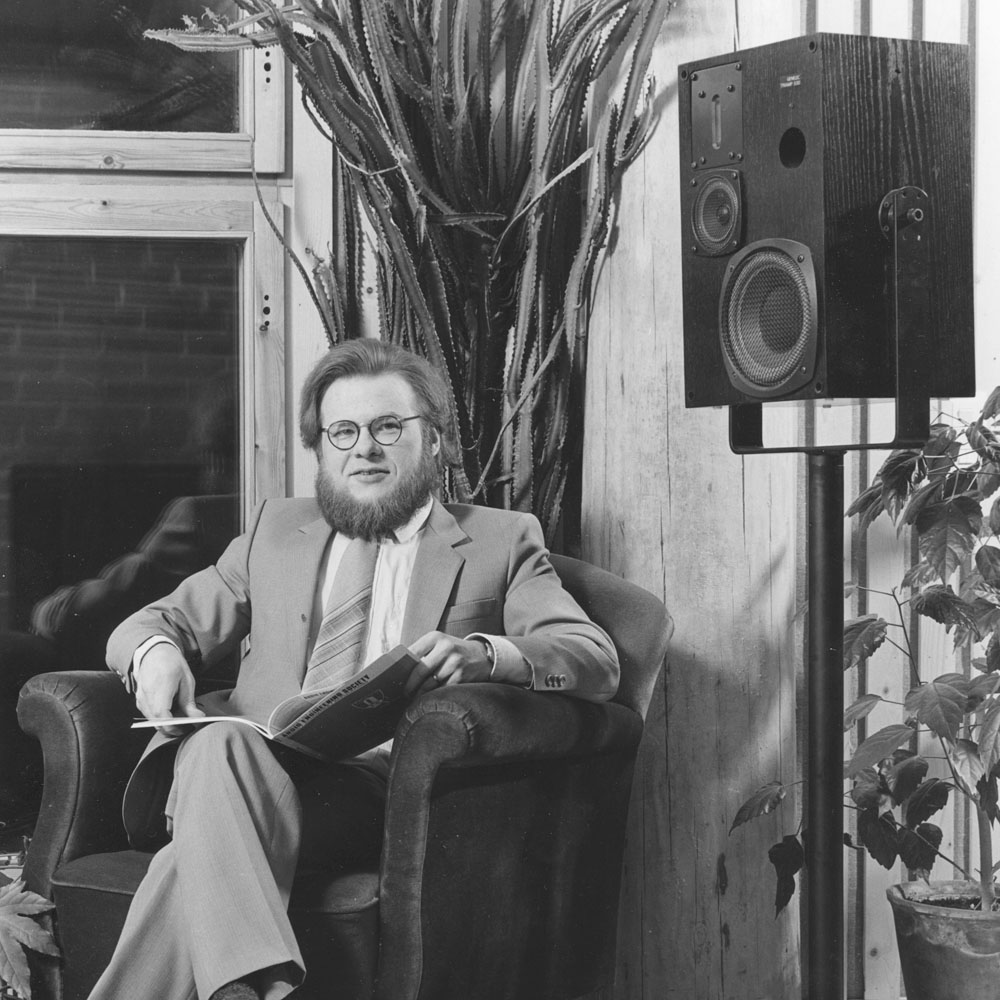 Ilpo Martikainen and the S30.
Circular Economy in Action
We’ve embraced circular thinking since the creation of our pioneering aluminium 1029A loudspeaker of the 1990s – especially in our choice of materials. Most Genelec enclosures are made from recycled aluminium, which is approximately 95% more energy-efficient to produce than primary aluminium. In 2023, 97% of all the aluminium we used was recycled aluminium.
Proportion of Recycled Aluminium Used in Our Designs (%)
We've been using aluminium in our designs since 1996, and we now favour recycled aluminium - which is much less energy intensive to produce. In 2023, 97% of all the aluminium we used was recycled.
Annual Waste Recycling (%)
We set a 65% recycling target in 2025 and reached 70%. Our goal for 2026 is the same 70%.
Initiatives like our Genelec Certified Pre-Owned™ (CPO) programme give products a second life, which further reduces environmental impact. CPO loudspeakers are fully serviced, tested, and warrantied – offering excellent performance while supporting sustainable consumption. CPO includes everything from current models to vintage gems, each delivering the same level of performance as when they were new.
Measuring Our Impact
We’ve been monitoring our greenhouse gas emissions since 2020 using the internationally recognised Greenhouse Gas Protocol, helping us ensure transparency and continuous improvement. We track emissions across all three scopes:
- Scope 1: Direct emissions from facilities and vehicles.
- Scope 2: Indirect upstream activities such as energy purchases.
- Scope 3: Indirect emissions from our full value chain – like shipping, travel and purchased materials.
The emissions are measured in tonnes, and CO2e represents 'carbon dioxide equivalent'. This is the standard unit used to compare and account for emissions from various greenhouse gases, based on their global warming potential.
To identify the areas that offer the greatest potential for improvement, all three Scopes must be carefully evaluated, and this complex but vitally important work is ongoing. The initial publishing timeframe for publishing Scope 1 emissions was postponed, as we felt it was necessary to include a third party to verify our calculations.
In 2023, solar panels on our factory roof covered 10–15% of our energy needs. The rest is sourced from CO₂-free or partly renewable sources. We aim to reduce energy consumption and increase transparency in our reporting, with third-party verification underway.
Through design, materials, operations and innovation, we are working towards the goals of SDG 12 (Responsible Consumption and Production) and SDG 13 (Climate Action), shaping a more sustainable future for the audio industry.


Age Distribution (Oy and subsidiaries)
(Data in years / percentage.)
Women working in Genelec (Gender distribution)
Duration of Employment (Oy and subsidiaries)
(Data in years / percentage.)
Countries of Genelec Employees
Countries of Genelec Suppliers
Countries of Suppliers
Usage % of recycled aluminium per all aluminium used
Traffic
- Hourly
- Daily
- Weekly
- Monthly
Traffic
Greenhouse gas calculations (Genelec Oy, Finland)
(Data in years / tCO2e)
Age Distribution (Oy and subsidiaries)
(Data in years / percentage.)
Women working in Genelec (Gender distribution)
Duration of Employment (Oy and subsidiaries)
(Data in years / percentage.)
Countries of Genelec Employees
Countries of Genelec Suppliers
Countries of Suppliers
Usage % of recycled aluminium per all aluminium used
Traffic
- Hourly
- Daily
- Weekly
- Monthly
Traffic
Greenhouse gas calculations (Genelec Oy, Finland)
(Data in years / tCO2e)